Life in the Times of Coronavirus: Lockdown Day 29
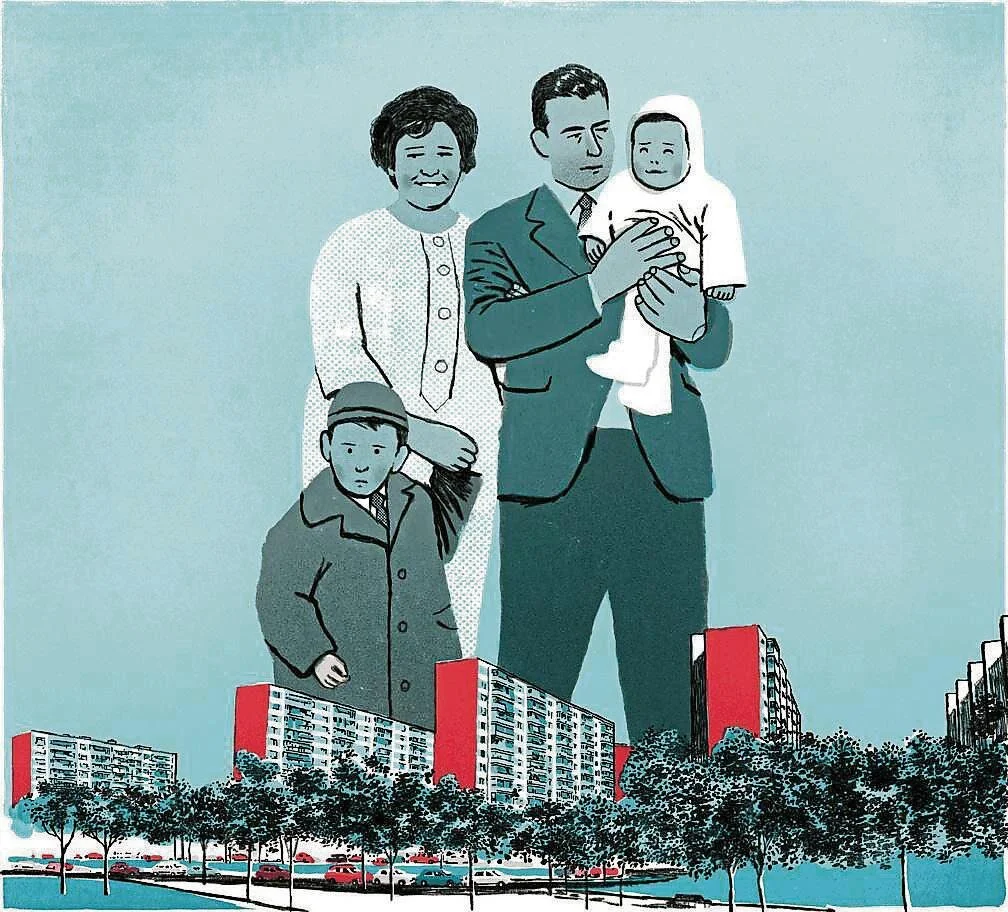
Source: La Vanguardia.
Over the ensuing weeks, the news will, of course, be consumed with the efforts to recover from the coronavirus pandemic that has gripped the world. In Spain—which today confirmed a downward trend both in new COVID-19 infections as well as deaths—the focus is largely on the economy. There is growing talk of how the country must be taken out of “hibernation” and some people will be allowed to return to work as of Tuesday. Perhaps Madrid feels emboldened by the fact that nearly 60,000 people have recovered from the coronavirus and wishes to bring the economy back online as soon as possible.
Amidst all the news about the economy and the continued spread of the coronavirus, it is the human cost which has interested me the most. I ran across an article in La Vanguardia which was penned by the famed Catalan journalist Jordi Évole in memoriam of his Tía Celia, who died of complications from COVID-19. I was moved to tears reading the tribute he wrote to his aunt, parts of which I’ve translated for you below:
When I was little, we used to visit my cousins and uncles on a specific day and at a specific time of the week. We would go to Tía Celia's house on Sundays after lunch. She lived with Tío Pedro and their three children (Pedro Luis, Antonio and David), in an apartment block in Bellvitge [on the outskirts of Barcelona].
But for me, going to Bellvitge meant going to another world. Tía Celia lived on the 12th floor, and from my aunt's window, the views were incredible. Imagine what the Castelldefels motorway looked like, or the Bellvitge hospital, or the El Prat airport ... And the fields, yes, yes, fields with agricultural activity, where today you can find the Hospi stadium or the parking lot of the hospital. That window, in the eighties, was my Playstation or my Nintendo. I could spend hours staring out the window.
[…]
When we grew up, visits to Bellvitge stopped being so frequent, but over the years, Tía Celia, Tía Salud and my mother would find excuses to get together. We got together for several years until Tía Celia had a stroke. And nothing was the same anymore. Though she did sometimes surprise us with memories of the past that she evoked with the same lucidity that she always had.
I’m grateful for the example set by Tía Salud, my father, my mother and my cousins, who visited Tía Celia at the nursing home every single day. Until, that is, the lockdown came into effect.
The paradox is that Tía Celia, who used to bring us all together, has departed alone. Like so many others. Far too many. This is the cruelest face of this pandemic. May these lines also serve to remember all of them as well.
As Évole writes, the fact that many people who die from the coronavirus do so alone and without a familiar face is indeed the “cruelest face of this pandemic.” People die alone, and funerals are postponed indefinitely. This, of course, does not mean that grief can be stopped.
Unfortunately, we are not exempt from this sobering reality. Because of the 16,353 people that have died in Spain as of today from the coronavirus, we knew one of them personally: his name was Ramón.
María, my mother-in-law, started dating Ramón in 2013. Both had been single for a number of years (María’s husband—Franky’s father—died in 2006 from multiple health-related issues; Ramón’s wife succumbed to cervical cancer in 2010) and they were introduced by a mutual friend in March 2013. They had apparently hit it off immediately, bonding over their shared Andalusian roots (she’s from Granada, he was from neighboring Jaén) and love of copla music which was immensely popular in Spain in their younger days. They both also loved to dance together and quickly started frequenting the afternoon balls held at retirement homes throughout Cerdanyola.
He caught my interest right off the bat, María would always say.
And I knew she was the one for me, Ramón would rejoin.
I first met Ramón on Mother’s Day in 2013. We invited María and Ramón to our home for lunch to celebrate the holiday and cooked a simple dish of roasted chicken and vegetables. Because it was a sunny day, I also made strawberry lemonade to give our meal a decidedly springtime flavor.
They walked into our flat holding hands. I found it endearing, while Franky (who had never seen his mother with a man other than his father) was a bit uncomfortable at first at seeing his mother being so affectionate with Ramón. I recall Ramón greeting us with a kiss on each cheek (normally men only shake hands, and kisses are reserved for close family members) and I remember also the scrape of his unshaven chin as I pulled away. As he shook my hand, I was surprised by the strength of his grip and the roughness of his touch.
Rugged from so much work, Ramón said, as if reading my thoughts. He grinned and I saw an eager smile full of aluminum fillings and slightly jaundiced teeth.
After they had settled in and sat down on the couch, I poured two glasses of lemonade and offered one to each of our guests. María sipped hers gingerly before setting the glass on the coffee table. Ramón, meanwhile, didn’t accept the cup I offered him.
I can’t… Ramón started.
…he’s diabetic, María said, finishing his sentence.
We engaged in the first of many conversations that were focused on Ramón’s health. At that point, he’d just turned 71, and Ramón told us of how because of his particularly serious case of diabetes, he had to take extra special care of his health. He walked three hours a day, had a strict eating schedule to prevent any sugar crashes, and only allowed himself a small glass of wine with lunch and to accompany dinner on the weekends.
María, perhaps to underscore the contrast between her and Ramón, announced that she is blessed with good health and that she didn’t have to take a single pill. (She was 65 at that point, and her health remains strong at 72.)
Let’s hope it stays that way, Ramón said, holding her hand.
Indeed! María replied, leaning in to kiss him.
Franky quickly shifted his eyes to the cat, who was quietly nibbling on his own meal in the corner.
Ramón and María were largely inseparable from that point, so we got the opportunity to get to know him quite well. I recall that first afternoon for the lovely impression that he made on us: Ramón was affable in a grandfatherly way, liked to tell dirty jokes and constantly doled out advice for us younger folks.
Of course, like anyone, he had many different sides to his personality. Ramón was generous, but he was also frugal when he needed to be and often brought home discarded furniture to repair. (We still have a lamp that he fixed way back in 2014.) He smoked cigars while he went on his hour-long walks and in the summer, he’d head out in a gray tank top and close-fitting hat with ESPAÑA printed on the front in red capital letters. Ramón fully supported our marriage and was present at our wedding in June 2014. But he was also old-fashioned and made sexist or even racist comments much in the way that a grandfather complains about how much better things used to be when they were younger. And yes, he could be cantankerous at times, which often resulted in drawn-out arguments.
But Ramón was kind and despite his tough exterior, one could sense from gazing into his eyes that he was, at heart, perhaps perpetually lonely. I say this because of the way he would tearfully lament the loss of his wife as if she’d departed just yesterday and he was simply waiting for her to return from a long trip.
When I see her again… he’d start over a cup of saccharin-sweetened coffee, I’ll tell her how much I missed her.
Ramón never forgot his wife and though I never met her, it seemed that they had a deep bond until the very end.
María and Ramón broke off their relationship in November 2018, for reasons that I don’t fully understand. María explained that she was tired of his mood swings and military-like adherence to a schedule; Ramón complained about her laissez-faire attitude toward everything. He moved out of María apartment in Cerdanyola and went back to his empty flat in the Roquetes district of Barcelona.
We lost touch after that. María lost interest in dating while Ramón found love in another woman, who was also named María. (Yes, really.) We’d hear news about him every now and then: his brother died in 2019; the birth of a new granddaughter in the summer; plans to remodel the flat he now lived in with his new partner. But we didn’t hear much else.
Until a few days ago, when María told us that Ramón had passed away on March 28 from complications related to the coronavirus. He’d just turned 78 years old. In his final hours, he died by himself, surrounded only be medical staff, and he was not allowed a single visitor.
I have to be honest in saying that I had a hard time processing his death. María, who was quite ill with coronavirus herself when Ramón died, seemed to be unphased by his passing. Not that she doesn’t care—I’ll always remember him and love him, she told me—but she seems to have an understanding of death that is beyond my comprehension and which she attributes to the benefit of old age. I, however, felt a great chasm open up inside of me when I thought about him dying alone—he, who hated being by himself—without anyone to comfort him. And, given the restrictions and danger of infection, there was no funeral, no eulogies, no comforting words. I don’t know how his children disposed of their father’s remains, but my heart breaks at imagining how difficult it must be to say goodbye to your parent without being able to get the closure that a funeral brings.
I also felt torn about writing about Ramón. He wasn’t close family and, to be honest, I can’t say that we had an especially close relationship. But his passing serves to underscore the fact that every single person who has died from the coronavirus has a story, a past, a personality, a family that they leave behind. May we never relegate their memory to the cold exactitude of statistics and recall instead the flower of their youth and the million ways that they touched our lives.
This pandemic is cruel but is not eternal; it is widespread but it is not faceless. May Ramón, and all the other souls who have left without a proper goodbye, find their well-deserved rest, and may we always keep alive the eternal flame of their memory.
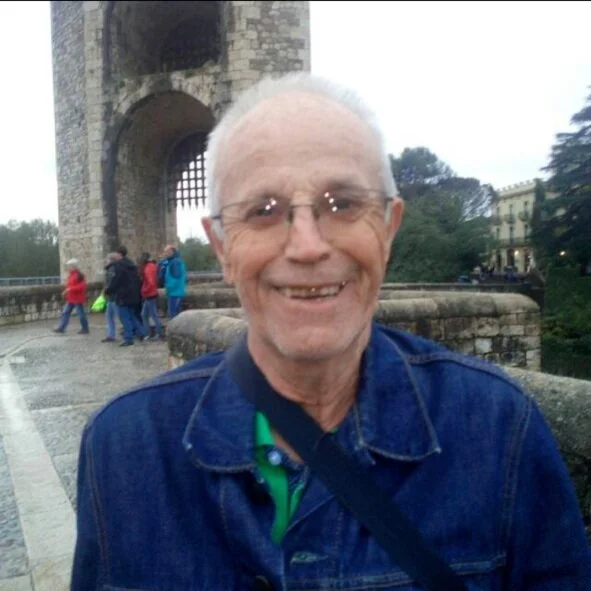
Ramón in Besalú, Catalunya, in 2016.