Life in the Times of Coronavirus: Lockdown Day 15
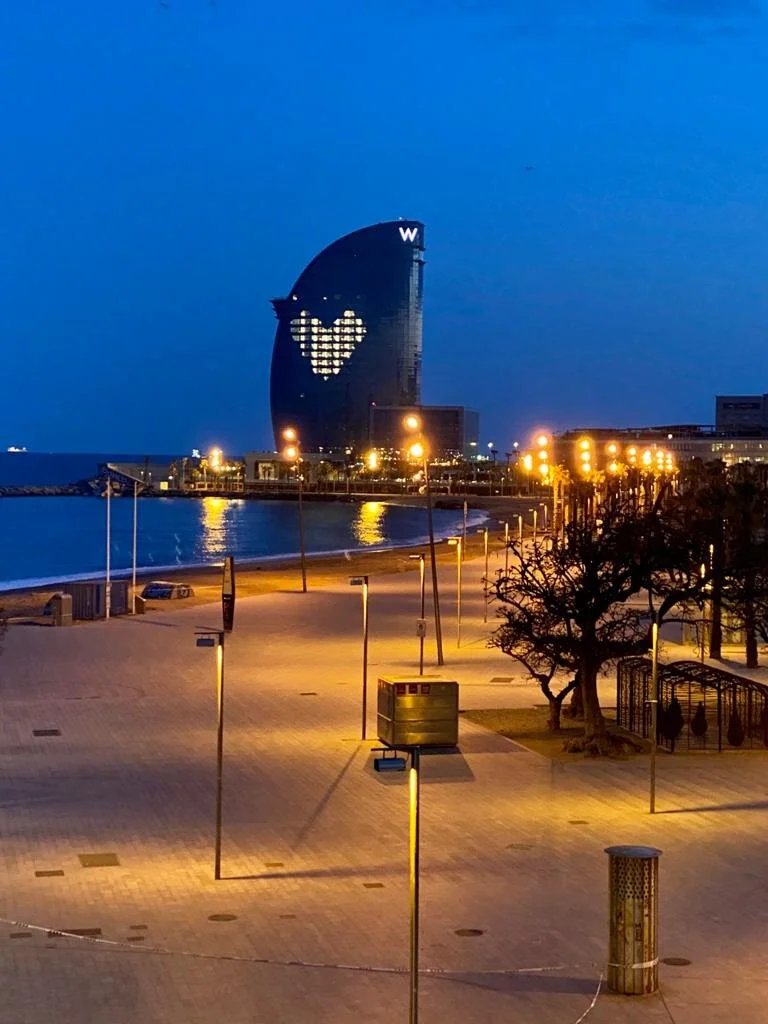
It may be true that during this government-enforced lockdown in Spain, there are days that seem grayer than others. As I mentioned in a post a couple of days ago, it is hard not to feel overwhelmed sometimes by the flurry of bad news that bombards you every day. (I’ve since stopped watching the news altogether, and only browse the headlines to see if there are any new guidelines or restrictions regarding the coronavirus pandemic.) The infection rate is still on the rise here (72,000 confirmed cases in Spain; 14,000 are in Catalonia; and there are 153 confirmed cases in Cerdanyola) and today there is news that the Fira de Barcelona convention center will also be transformed into a temporary hospital to house the infirm. The health minister said that it would house up to 300 beds, but also added (grimly) that it could house up to 2,000 if need be.
And yet, like always, the universe always provides a lining of hope. Today came the good news that though infections are still rising, the overall situation in Spain seems to have stabilized, as it seems that the social distancing practices are starting to have the desired effect of slowing down the transmission of the coronavirus. Let me repeat that: staying at home, sacrificing time with our friends and family, being responsible citizens by considering our own health as well as that of our community – these lockdown measures are finally beginning to bear fruit.
From La Vanguardia:
The data indicates that the virus's expansion is slowing down. At least this is what is indicated by the technicians of the Ministry of Health, who see how the percentage of new infections is increasing at a reduced rate. The confinement measures seem to be working, and secondary contacts have been reduced… [Authorities point] out that, according to the data, some autonomous communities have already reached the peak of transmission.
Spain isn’t out of the woods yet by far, but at least it’s heading in the right direction. This is good news on the macro level, something that definitely lifts our collective mood.
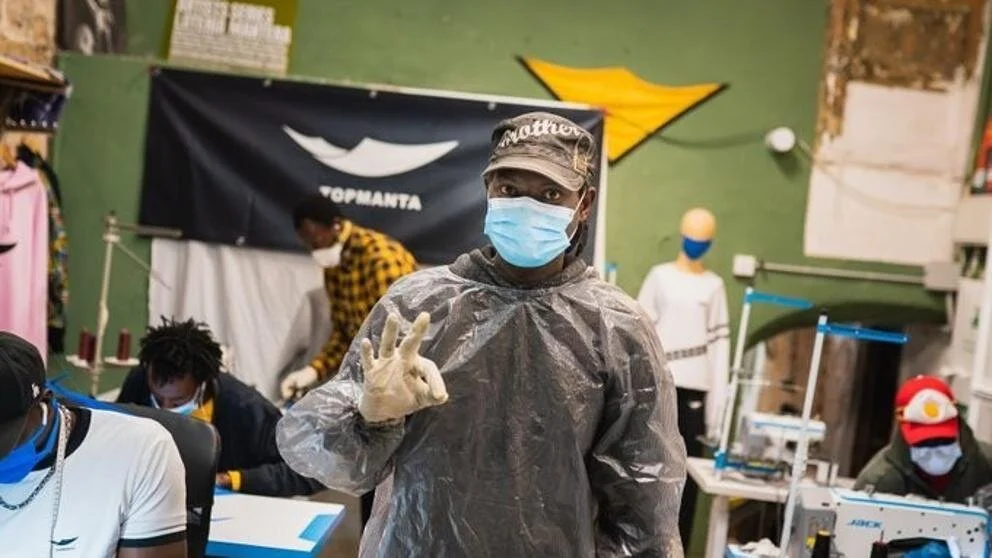
Hope today has also come in seeing the beauty of the human spirit. If you have ever been to Barcelona, you will have seen the so-called manteros. “Manta” means “blanket” or “sheet” in Castilian Spanish, and the term manteros refers to the African immigrants and refugees who stretch out their respective blanket and set up mini bazaars in the main plazas throughout the city. They sell everything from cheap souvenirs to FC Barcelona jerseys to watches to imitation Nikes. They have been very hard hit by the coronavirus, for evident reasons: there is no one walking around to buy their products, and they can’t set up shop in the first place. But the manteros union, who have been historically scapegoated and discriminated against in Barcelona, has started making medical masks and aprons to donate to local hospitals and medical centers to contribute to the fight against the virus.
Or, hope can come in the example of the beauty of the human spirit that shines through in moments of crisis. Last night, we called the medical service and again asked for a doctor to be sent to see my mother-in-law, María. After waiting on hold for an hour, Franky finally got through to a nurse who, after hearing about María’s constant fever and symptoms, said they would send a doctor to see her that night. We called around eight in the evening, and they said that the doctor would stop by “in about 3 or 4 hours” – meaning midnight, or even one o’clock in the morning. We had no choice but to wait and decided to alert my mother-in-law.
We’d last spoken to María around six that same evening. Her spirits were deflated, her fever hadn’t abated, and she’d barely eaten all day. She said she was going to go back to sleep. We wanted to let María know that the doctor was coming and that she should expect her later that night, but she didn’t pick up when we called. Franky had to slip into his apocalyptic gear as we call it (gloves, sweats, face mask; I convinced him to leave the swimming goggles at home) and ring and ring the doorbell until she woke up. This was around 11:00 p.m.; the doctor, because of her full schedule, didn’t show up until 1:30 a.m.
The doctor’s name is Sabrina. I know this because, perhaps sensing the worry in Franky’s voice, she took the time to introduce herself, reassure him about his mother’s condition, and promised that she’d check in on her no matter what. Despite her packed schedule – Dr. Sabrina said she had nearly 40 patients to check in around our town on during her 10 hour shift – the kind doctor sat with my mother-in-law, listened to her lungs, checked her fever, blood pressure and other vital signs. María would later tell us that the doctor was jovial and encouraging, just what she needed.
Dr. Sabrina patiently narrated his mother’s condition to Franky as she drove to her next appointment. (The doctor was on speakerphone, so I managed to hear everything.) She confirmed that María had most likely contracted COVID-19 (again, tests are scarce here, at least for us average folks) but also said that my mother-in-law had pneumonia that was related to the coronavirus. She prescribed antibiotics and told us what food and drink that we should purchase for María over the coming days for her to recover from the coronavirus. And before she hung up, Dr. Sabrina also told him not to worry about his mother: she’s tough as nails, she said, and will be fine. She just needs to be patient. The doctor even called this morning (after sleeping just a few hours presumably) to see how María was doing and to lift her spirits. I do not mind confessing that I cried silent tears of gratitude at so magnanimous an act.
Today, I’m thinking about all of the healthcare workers, supermarket employees, public transportation employees, janitors and pharmacy staff who have to report to work to keep our society operating. And I’m thinking about everyone who is doing their part to help our community heal from the damage caused by the coronavirus pandemic.
As for me, little by little, I’m getting accustomed to being at home, and using the time to focus on what I can do not on what I cannot. This, too, shall fade into memory, and is teaching us lessons whose importance we may not yet appreciate. Only time can put everything into perspective.
Like I’ve shared, folks all over Spain take to their balconies at 8:00 p.m. every evening to applaud the efforts of all the healthcare workers who are battling the coronavirus and saving lives around the clock. Tonight I will clap especially hard for Dr. Sabrina, the doctor whose kindness helped me find my path, and whose altruism reignited the flame of hope.