Life in the Times of Coronavirus: Lockdown Days 46-51: April 27-May 2, 2020
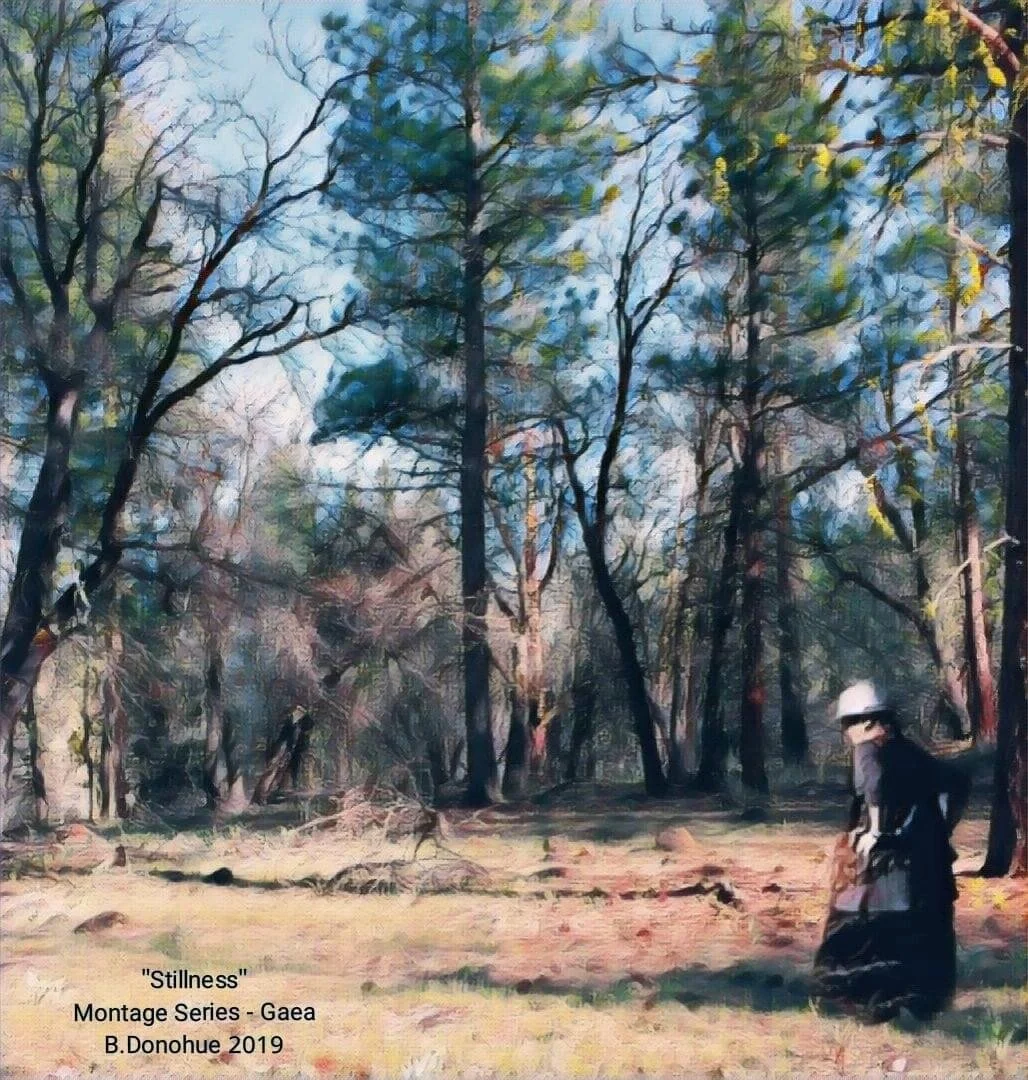
“Stillness” by B. Donohue. I was in the mood for nature today, but ventured instead to the grocery store…
Yesterday marked fifty days—seven weeks—since the state of emergency was declared in Spain officially on March 14. We are still technically under the government-enforced lockdown (which is scheduled to be in force until May 9), though given the improving situation in Spain, certain restrictions have been lifted.
As of today, for example, some outdoor activity is allowed. From 6-10 a.m. and from 8:00 – 11:00 p.m., adults under 70 may exercise on an individually or go for walks no more than 1 kilometer (a little more than half a mile) from their homes. Those over 70 are allowed the same privileges from 10:00 a.m. – 12:00 p.m. and from 7:00 p.m. to 8:00 p.m. Same distance limits apply. Kids 14 and under (in groups of three maximum) can be outside with a parent or guardian from 12:00 p.m. to 7:00 p.m. A chart has been going around on WhatsApp in Spain to summarize this for us:
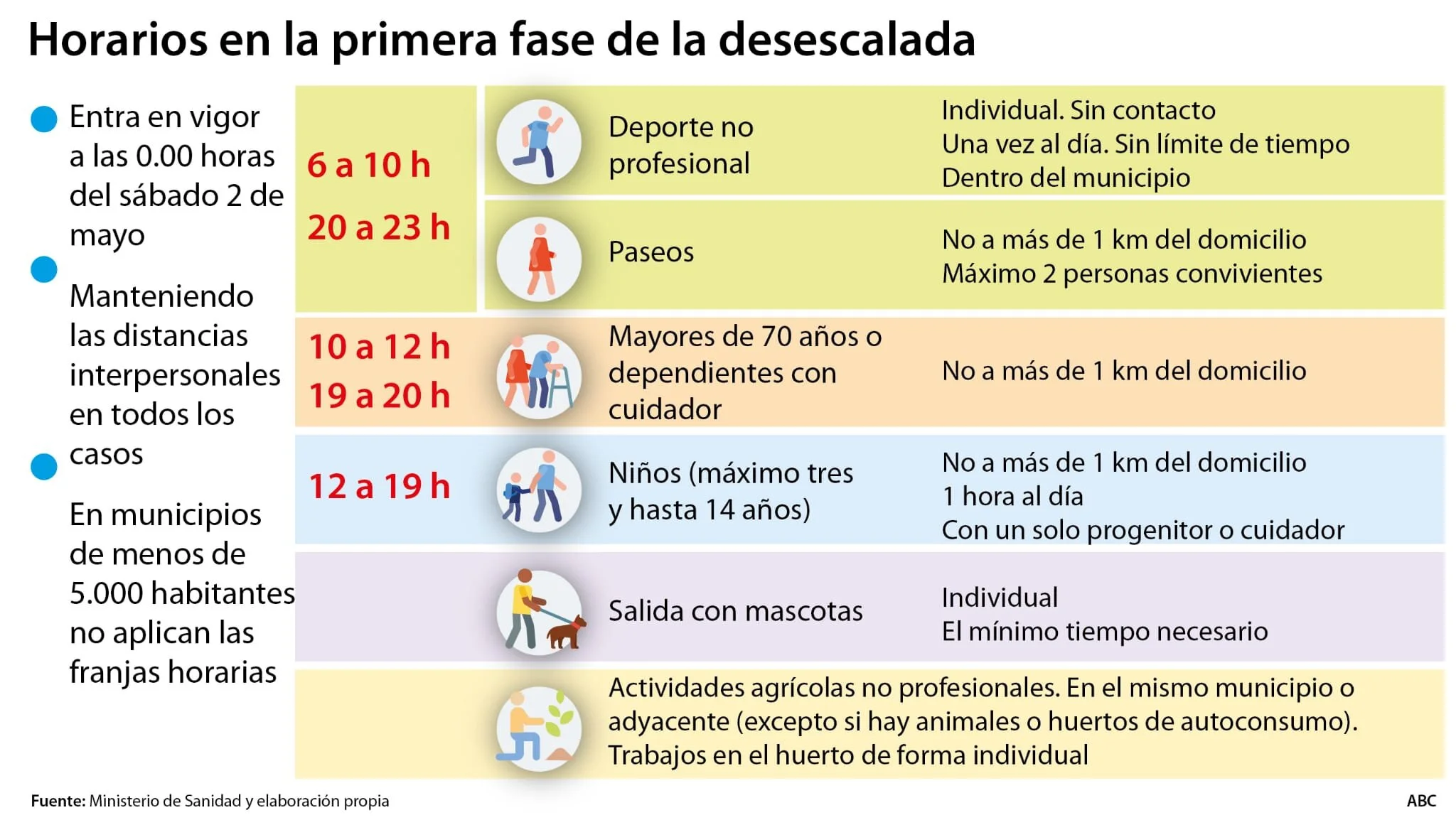
If you find the above a bit confusing, you’re certainly not alone. It was not immediately clear, for example, if those under 70 could only venture out for groceries and other items during the specified hours, or if that schedule applied just to exercise. Moreover, masks will be obligatory on public transport, but the government did not underscore the importance of wearing them in public as well, nor did they clarify whether these would be obligatory when grocery shopping as well (as has been the case up to now).
This, unsurprisingly, led to a variety of interpretations on the new guidelines in effect as of today. I was able to witness it firsthand this morning when, seeing that we were missing fresh fruit and vegetables, I decided to head out to the grocery store. So I strapped on my face mask, pulled taut my gloves, pulled down the safety visor and walked down the stairs.
It was a warm, sunny day, the kind when we’d take a drive to the beach or go for a long walk through the town before stopping for lunch. You know the kind: bright blue skies, cool breeze, the sun just strong enough to warm your skin but not burn it. Despite the mask I was wearing, the fresh air reinvigorated my spirits instantly.
The warm weather was also apparently too much temptation for a lot of our neighbors. Two old men sat chatting on a bench, their knees touching. A young woman about my age bent down to adjust her daughter’s mask with her dirty gloved fingers. Another picked at her eye after opening a door and then scratched her nose with her other unprotected hand. Three families, about 10 people total, stood conversing quietly in the springtime sun. I watched as the adults exchanged kisses, the standard greeting here, despite everyone being strongly discouraged not to do so as it’s an easy way to spread the virus. The kids, meanwhile, picked their toys up from the soiled ground before some sprang into the arms of their grandparents.
When I got to the grocery store, it was clear that there were very few people taking the situation as seriously as they had even a week ago. Of the 15 people waiting to get into the store, about half were practicing social distancing. The rest waited in small knots and chatted, pulling down their masks to talk to each other. I kept my distance (about 10 feet, thank you very much) and when the line didn’t move, I went to another store. Same. A third store brought the same alarming levels of defiance. With a total of 576 cases in Cerdanyola and another 1000 suspected cases, the irresponsibility of some of my fellow citizens was truly breathtaking.
I wound up going to one of the corner shops which were mercifully empty. The owner, a Tunisian immigrant named Haddid, shared his concerns with me and said that some people had even become upset with him for enforcing the strict regulations in place regarding the maximum number of people that can be inside an establishment at a time.
Coronavirus doesn’t understand deadlines, Haddid complained from a safe distance as he weighed my bananas, apples, oranges and assorted vegetables. People don’t think about tomorrow, only today.
I scanned my credit card to pay for my purchases and said I agreed. He handed me the bag.
Tomorrow we’ll hear another tale, Haddid said. People learn slow.
Some people, I corrected him, and pointed to my mask. Some people, not me.
Haddid laughed as if he had information I did not know. His yellow surgical mask stretched as he chuckled. Yes, but we are all still in trouble.
I made my way home and thought about what Haddid’s observations. I walked past the now-brimming playground, the teeming market, the line of people waiting for their lunch at a restaurant. I felt a shudder come over me as I thought again about the dreaded Second Wave which, as some scientists are warning, may come as soon as July:
The question is not whether it will happen; the question is: when will it happen? July or August? October November December…? Little by little we are coming out of confinement, but the specter of a second wave is already being felt over Europe. Scientists take it for granted that there will be a second wave, and that it could be worse than what we are experiencing…the de-escalation that we long for is not synonymous with victory against the coronavirus.
“From a technical point of view, we should not relax anything; We do it because socially and economically people long for some relaxation, but the virus is much more present among us today than when the state of alarm was decreed. Now, we have between 10 and 15 times more active cases and asymptomatic people who can infect others. And if we get confused and do some messy maneuvering, the second wave may be worse, because we start out with a higher number of infected people.” The warning is serious. It comes from Margarita del Val, the immunologist and virologist who coordinates 150 teams gathered by the CSIC in a large interdisciplinary research platform to deal with the emergency.
To illustrate the situation, the researcher from the Severo Ochoa Center for Molecular Biology compares our situation with that of the city of Wuhan, the cradle of the pandemic, where new cases were reduced to zero. "That is not going to happen here," she warns. In Wuhan they succeeded with far fewer cases than in Spain because they spent two and a half months under confinement like the one we only did for two weeks. But here we can't take it anymore; people have not stopped questioning every action that has been taken.
Seeing the behavior of my neighbors and the general sense of relaxation when it comes to the lockdown measures, I could not help but think about how this would affect my own life. I am thinking about the best ways to deal with the pandemic on a long-term basis, which includes my not flying home to visit my family this year (and them not coming to Europe either) and seriously re-thinking any travel plans I had for the autumn or winter. For the foreseeable future at least, the pandemic will be a reality and we will have to live alongside the coronavirus until it can be eradicated. For my part, given the truly lackluster performance of the Spanish government in clear and efficient communication, I can only control my own actions. And for me, this means staying at home as much as possible over the coming weeks, limiting contact with friends, and being able to stay up-to-date with any new developments. Other than that, the rest is seemingly up to the gods.